Chalmers can deny it, but government demand still matters to interest rates
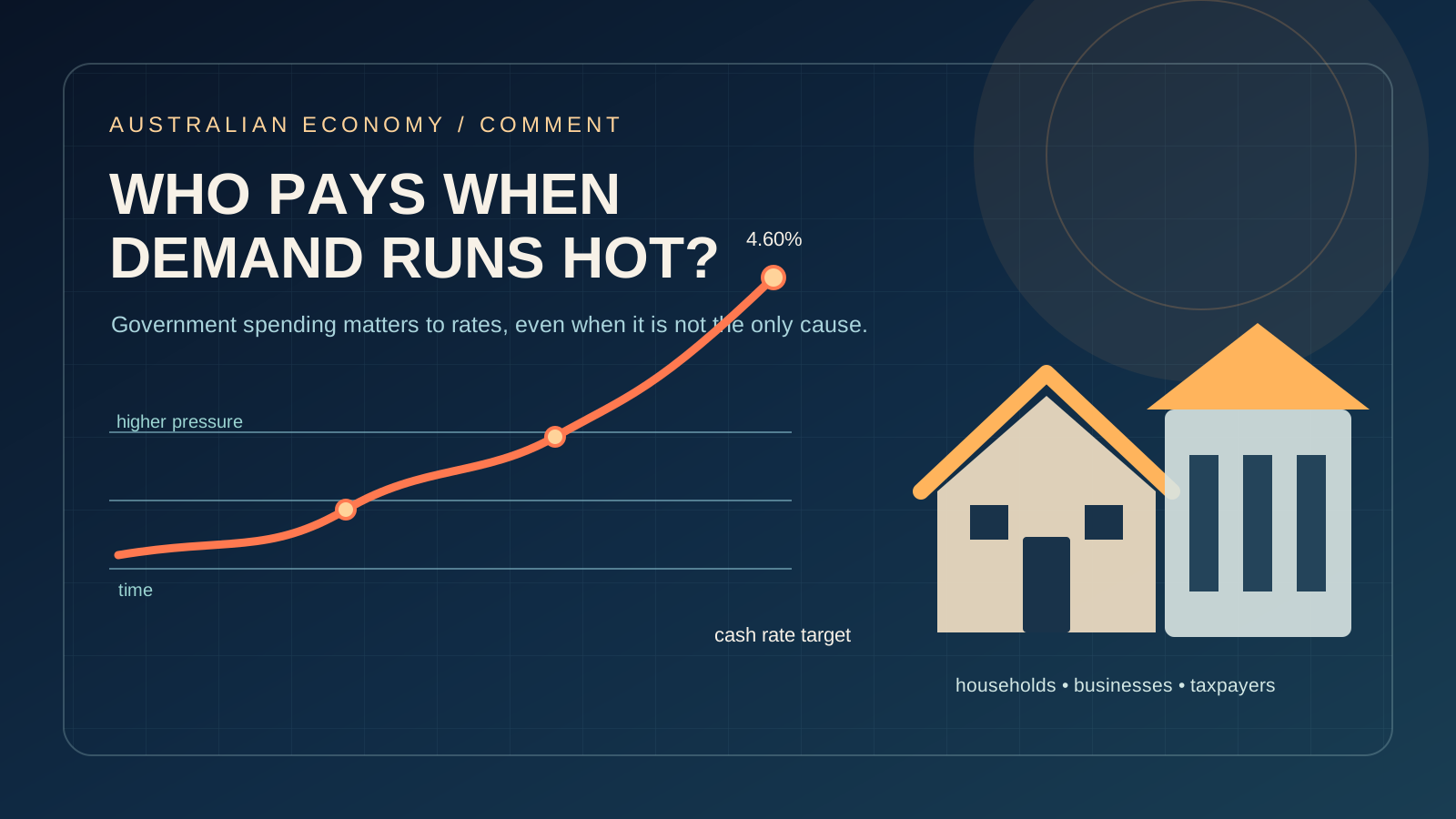
The Reserve Bank’s 25-basis-point lift in the cash rate to 4.60 per cent on 29 September was not a bolt from the blue. Inflation was still running too hot: the August CPI rose to 4.0 per cent over the year and trimmed-mean inflation was 3.6 per cent. [1][3]
Jim Chalmers does not personally set interest rates. The question is whether the policies he helps design affect demand in an economy that is already struggling to produce enough. They do, although they are not the whole story.
What the RBA actually said
The RBA did not blame Canberra for everything. Its statement pointed to a broader Middle East conflict, higher global energy prices and AI-related demand for technology goods. It also said domestic spending and investment were stronger than expected, domestic capacity remained under pressure and recent inflation outcomes were worse than expected. [1][2]
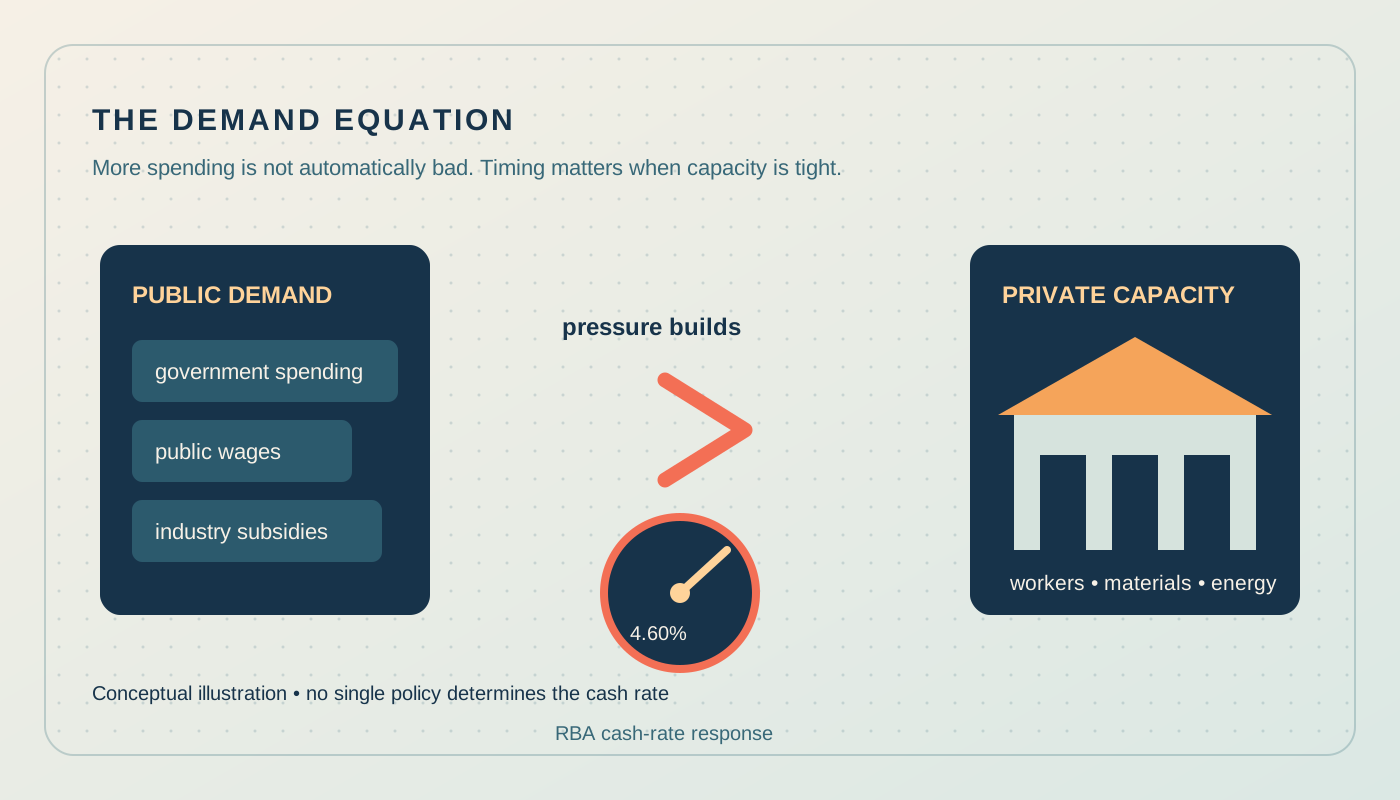
That is an inconvenient answer for both sides. Global shocks matter, but they do not erase domestic choices. If demand is running ahead of supply, extra public consumption, wages, infrastructure or subsidies can make the Reserve Bank’s task harder. A policy does not have to be the only cause to be one of the causes.
The August figures show why the RBA was worried. Housing was the largest contributor to annual inflation, while transport was pushed higher by petrol prices. The ABS also pointed to higher world oil prices and the unwinding of federal fuel-excise relief. [3] Blaming every dollar of household pain on the federal budget would be silly. Pretending the budget is irrelevant would be just as silly.
Chalmers has a defence. It is not a complete defence.
The Treasurer’s defence is that Labor has restrained spending compared with its predecessors and that the budget is improving. The 2026–27 Budget forecasts a $31.5 billion deficit. It says real payments growth will average 1.5 per cent over eight years and payments will fall from 26.8 per cent to 26.2 per cent of GDP by 2029–30, but will they. [8]
That is a fair argument when the comparison is with an even more expensive alternative. It does not mean the government is withdrawing demand from the economy. A deficit still means spending exceeds revenue. Commonwealth restraint also does not cancel out state spending, public-sector wage growth or policies that encourage private investment in favoured industries.
The June-quarter national accounts offer a useful check. Public demand contributed 0.1 percentage points to quarterly GDP growth, driven by government consumption. General government consumption rose 0.6 per cent in the quarter and 2.0 per cent over the year. [7]
That is not proof that government spending caused the rate rise. It is evidence that the public sector was adding to demand while the RBA was trying to slow demand. The distinction matters to anyone paying a mortgage.
The real question is the federal government doing enough to slow inflation or are they just adding fuel to the fire!
Public-sector jobs are not all Chalmers’s jobs
The ABS counted 2.597 million public-sector employee jobs in June 2025, up 3.3 per cent in a year. Public-sector wages reached $249.5 billion in 2024–25, up 7.6 per cent. But almost 2.0 million of those jobs were in state government; the Commonwealth accounted for 385,900. [5]
Those jobs include health, education, public administration, defence and other essential services. They are not all discretionary positions created by Jim Chalmers. The June-quarter Labour Account recorded 16.7 million total jobs across the economy, but that measure does not tell us which jobs were created by government or which party deserves credit. [6]
The honest conclusion is narrower: a growing public payroll can add to wages and demand, particularly when labour is scarce. The data does not support pretending every public-sector job is a Labor invention. But the size of government is growing.
Renewable subsidies are not a free pass
The Future Made in Australia package is another source of demand and another example of policy being sold as if spending is costless. The government announced $22.7 billion over a decade, including a $19.7 billion stream to make Australia a renewable-energy superpower. Production incentives for hydrogen and critical-minerals processing are also part of the industrial policy. [9][10][11]
There may be a sound strategic case for some of this. Australia should not subsidise projects that cannot survive without taxpayers, but it should also not assume every dollar directed at a green project creates an equivalent dollar of national wealth. The benefits depend on productivity, export demand, technology and whether projects would have proceeded without the subsidy.
The package cannot fairly be described as the direct cause of the September rate rise. Much of it is spread over years, and some support depends on production. The defensible criticism is different: when governments subsidise investment in an economy facing capacity constraints, they should explain the timing, opportunity cost and inflation risk rather than waving a jobs figure around.
Also subsidies steer private investment, and when those investments don’t perform it becomes a drag on the economy. Lower productivity and lower growth, government cannot afford to be altruistic when steering private investment through government subsidies, otherwise we fall into a future of wasted opportunity.
The argument Chalmers cannot dodge
Chalmers is right that Australia is exposed to forces beyond Canberra’s control. He is wrong if that becomes an excuse to deny the effect of domestic policy. The RBA’s explanation includes both global shocks and domestic capacity pressure. [1][2]
No serious analysis can say Labor alone caused the rate rises. Nor can it say government demand is irrelevant because the deficit is smaller than it might have been. A government can spend less than its predecessor and still spend enough to add to inflation when supply is tight.
The useful test is not whether the Treasurer can win a blame game. It is whether the government will show Australians how much demand its decisions add, what the subsidies buy and which programs should be delayed when inflation is above target. Until then, borrowers are left with the bill while politicians argue over whose fingerprints are on the cash register.
Sources
[1] https://www.rba.gov.au/media-releases/2026/mr-26-27.html [2] https://www.rba.gov.au/speeches/2026/mc-gov-2026-09-29.html [3] https://www.abs.gov.au/media-centre/media-releases/cpi-rose-40-year-august-2026 [5] https://www.abs.gov.au/statistics/labour/employment-and-unemployment/public-sector-employment-and-earnings/2024-25 [6] https://abs.gov.au/statistics/labour/labour-accounts/labour-account-australia/jun-2026 [7] https://www.abs.gov.au/statistics/economy/national-accounts/australian-national-accounts-national-income-expenditure-and-product/latest-release [8] https://budget.gov.au/content/bp1/download/bp1_2026-27.pdf [9] https://treasury.gov.au/policy-topics/future-made-australia [10] https://www.aph.gov.au/About_Parliament/Parliamentary_departments/Parliamentary_Library/Research/Budget_Review/2024-25/NewIndustryPolicy [11] https://www.pm.gov.au/media/investing-future-made-australia